
Part 1: We make sushi and learn the secrets of ramen
WHAT IS THE FIRST THING that pops into your mind when someone mentions Japanese food? Is it sushi? Or Ramen? Tempura? Or something else?
I love food, and cooking is a creative outlet as essential to my identity as writing. Those who have read my memoir, Wherever the Road Leads (yes, this newsletter’s name is a play on that title), will know that during the two years in the 1970s when I lived and traveled in a VW microbus, I often cooked in the style of the surrounding region. On my two-burner butane stove, I attempted a paella in Spain, and, in India, I prepared fish curry and seasoned my dal (yellow lentils) with asafetida, the pungent dried resin of a type of fennel.
These days, traveling without a mini-kitchen, I content myself with taking cooking classes. Luckily, Erin, my daughter and travel companion, also enjoys this activity. On a recent trip to Japan, we took four completely different cooking classes.
*
December 21, 2025 – Tokyo, Sushi
Erin and I are eager for our first adventure. It is mid-morning, and after a long trans-Pacific flight and only four hours in Tokyo, we are off to make sushi.
The classroom, only two blocks from our hotel and across the street from the iconic gateway to the Sensō-ji Temple with its immense red paper lantern, is clean and spare. Two rows of tables fill the space, and a large, flat-screen TV hangs on one wall. A prep kitchen nestles in the corner of the room.
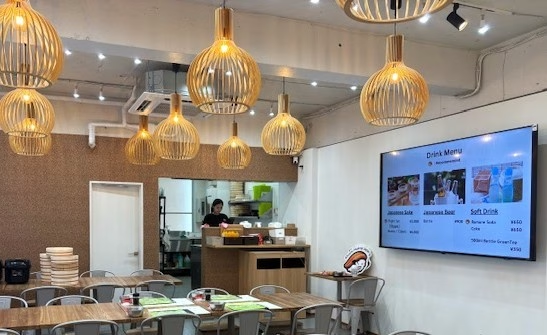
The staff, a young man and a woman both dressed neatly in white shirts and pressed black slacks, greet us with wide smiles. They gesture toward a table set with reed mats, chopsticks, wide-bladed rice paddles, and wooden bowls covered with cloths.
The only other students are a young couple, also from the United States, who are spending a few days in Japan before going to visit her parents in Taiwan. Our friendly chatter ends when our young instructor stands by the huge screen and starts a Power Point slide show. After a brief introduction to sushi and sashimi, he gleefully tells us it’s time to make sushi rice.
Alternating between explaining the process and pointing at the slides, he shows us how to add rice vinegar to the cooked white grains resting under the cloth. “Mix. Mix,” he says, “but gently. Do not smash the soft rice.”
Erin and I, seated across from each other, work together, while the couple cooperates to stir their rice. The young woman helper presents us with a divided, black-and-red lacquered dish that holds an assortment of raw salmon, imitation crab, shrimp, a dark green sheet of dried seaweed called nori, and other ingredients
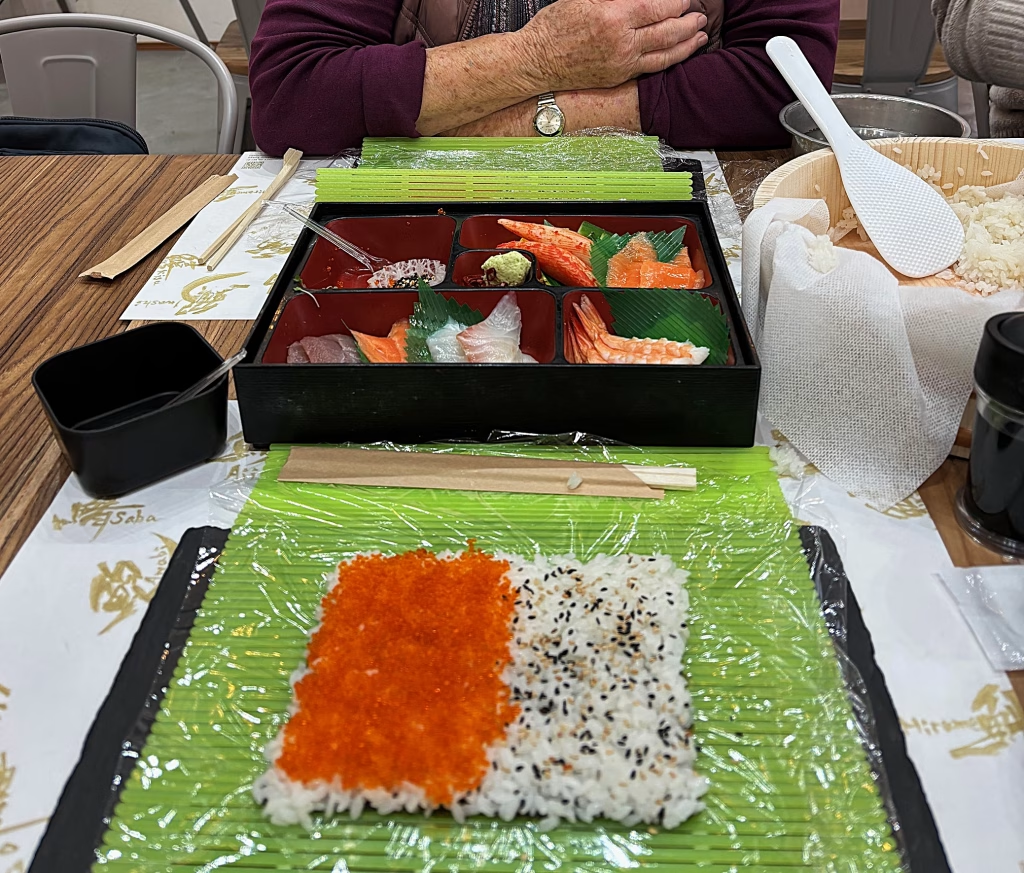
The instructions for making sushi rolls are clear, and the slides walk us through each stage. The young teacher walks around and encourages us with helpful pointers.
First, we are told to place the nori on the reed mat. Next, we each spread seasoned rice onto the seaweed sheet. We add glistening, coral-colored fish roe on one half of the rice. A black and white sesame seed mix goes on the other half. We next flip the whole thing so that the roe and sesame are on the bottom and the nori on top.
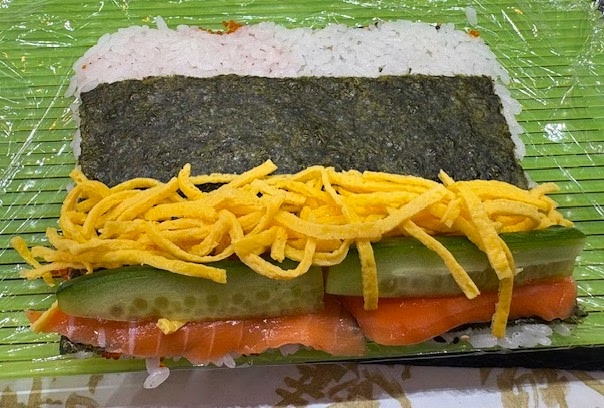
It’s time to add the fillings. We arrange raw fish, omelet strips, and cucumber on the nori sheet and roll it up tightly, using the mat to keep it together.
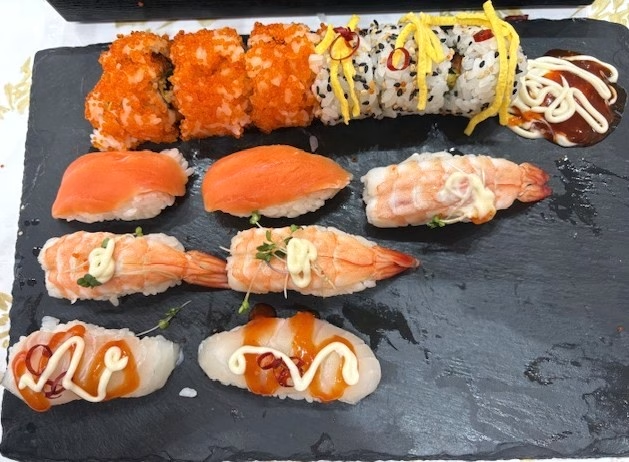
Our second dish is nigiri, the iconic Japanese bite of sushi rice and fresh seafood. Smoothing and forming the raw fish or cooked shrimp over a rice mound must be done in a specific and elegant way—the seafood coaxed into place.
The instructor demonstrates the actions with a flourish. “Fish in the palm of one hand. Squeeze the rice into a mound with the other,” he explains. “Place the rice on the fish. Turn it over just so. The fish is now topside. Smooth the fish into place with two fingers. Three movements. One, two, three. Hoi! Hoi! Hoi!” We are given plastic replicas to practice the motions before we are allowed to try with real fish and rice. Erin masters the technique almost immediately, and, with some practice, I get a feel for it too.
Our prepared sushi may not be quite up to professional standards, but the cut sushi roll and the nigiri look quite edible displayed on a black stone dish. Eating sushi made by our own hands is our well-deserved reward. Yum!
December 27, 2025 – Kyoto, Ramen soup
The late December days are cold in Kyoto, and everyone on the street is bundled up in coats and woolen scarves. Long lines form at midday and early evening outside the many ramen shops.
On our second day in Kyoto, our driver winds through a maze of narrow alleys and stops in front of a building with traditional slatted window coverings. Noren curtains, commonly seen hanging over the doors of shops and restaurants in Japan, flutter as we pass under them.
Inside, we take off our shoes and set them in cubbies nearby. We are scheduled for a noon ramen class, and I am hungry for a warm portion of this rich meal in a bowl. The kitchen, with its broth kettle and segmented noodle-boiling equipment, is filled with steam. A group of six previous students sit at wooden tables in the rear and slurp from their bowls of noodles and broth.
To my surprise, Erin and I are led away from the kitchen and up a steep flight of stairs. The upper floor is a ceramic painting studio! A teenaged helper ties a chef’s scarf around our hair and explains that we are going to paint our own ramen bowls. There are bottles of paint, brushes, water, and paper towels on a wide table surrounded by stools. Shelves on the back wall display hand-painted bowls, some with childish scrawls, others with emblems, names, or decorative designs.
The boy gives us wide, shiny black ceramic bowls. “Paint whatever you like,” he says. “Pick up tomorrow. Must be fired after you paint.” I wonder how we will manage this unexpected addition to our already busy sightseeing agenda.
Erin and I have come to cook and to eat, not to paint. I am upset by this new direction. But both Erin and I love crafts of all kinds, so we sit at the worktable trying to wrap our minds around the change. Soon I am having fun decorating my bowl with green clumps of bamboo. I sign the bottom with a red “pretend” Japanese character that resembles my name. Erin is immersed in creating a geometric pattern around the rim of her bowl. Her brushstrokes are precise and careful.
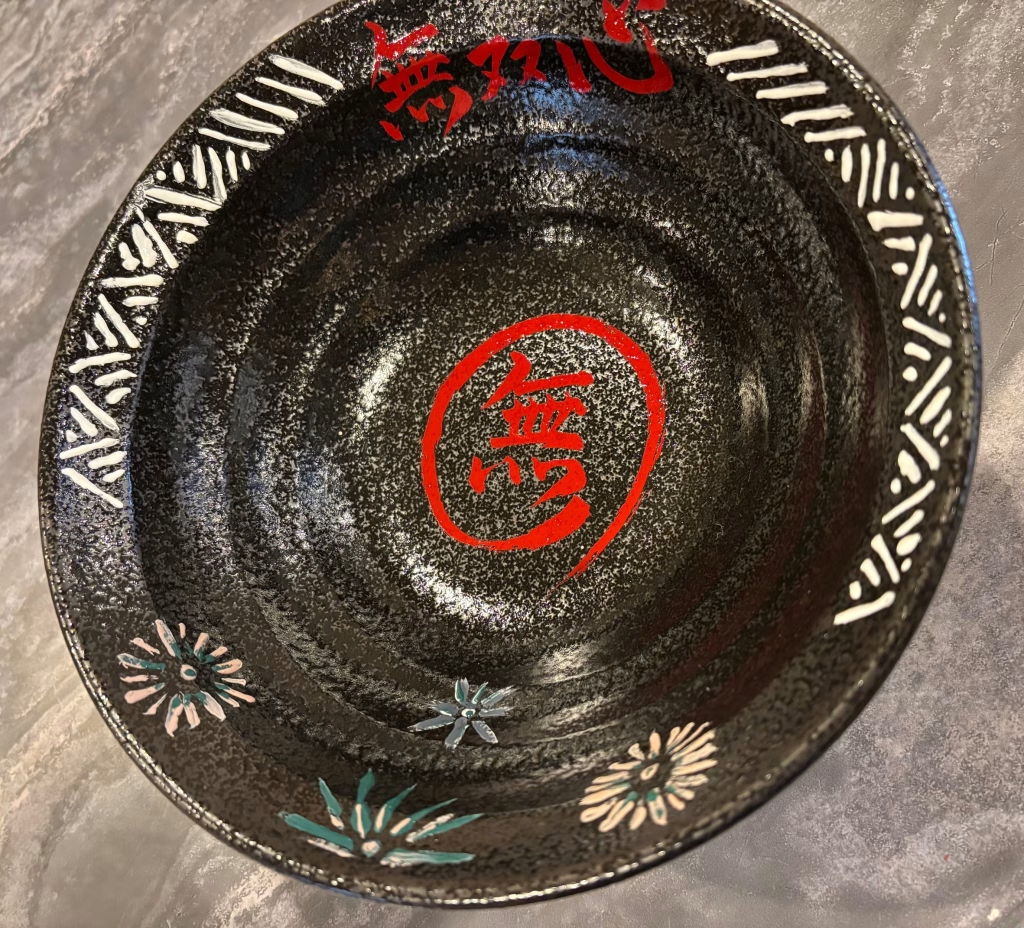
After we paint for thirty minutes, the kid comes back. “Time to cook,” he says, and leads us down the narrow stairway.
Two instructors wait at a long prep counter. Their English is rudimentary, and they are shy about using the language. They have elaborate teaching aids—instructions written in English, photos of ingredients, and drawings showing method, all presented on laminated cardboard cards held together with an O-ring. There is more than one kind of ramen soup, we are told, and we will learn the family recipe served here.
We start with the broth, the ingredients depicted on a set of three cards. The long-cooking broth we will use has been simmering for hours in the huge kettle, and its warm aroma fills the air. One of the instructors, his round-lensed glasses slipping from his nose, pulls a soy sauce bottle from the shelf and points to the label. Erin quickly adds a note to the app on her phone, while I take pictures of the laminated recipe cards that list pork belly, pork cartilage, ginger, garlic, and potatoes as the main ingredients of the broth.
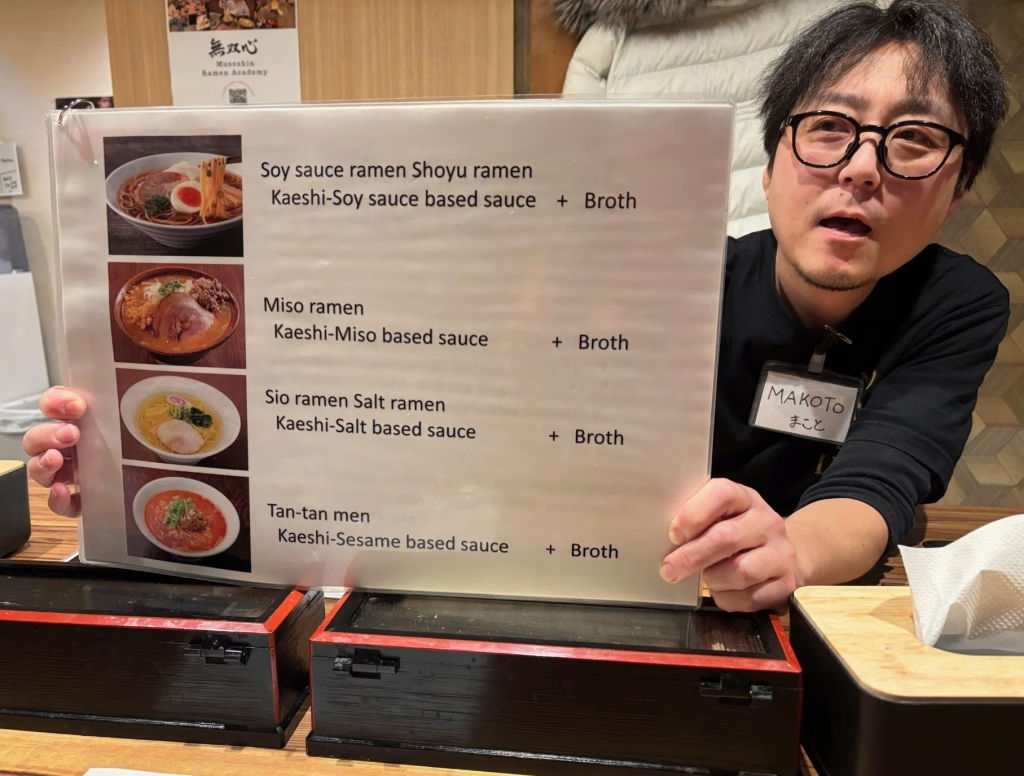
We pay close attention as the second instructor explains how to make jammy-yolked boiled eggs, a popular add-on, and the secrets of making Kaeshi-Ramen sauce to flavor the broth.
Next, teacher-number-one demonstrates how to sear pieces of pork belly with a small butane torch like the tool French chefs use to create the sugar crust on crème brûlée. He encourages us to try this simple job, and the sizzle of the pork makes my mouth water for the promised bowl of ramen at the end of class.
At last, Erin and I are given bundles of fresh wheat noodles, which we untwist so they won’t stick together when boiled. As he relaxes, the second instructor’s English has improved. At his direction, Erin and I cook the noodles in deep sieves lowered into the segmented vat of boiling water.
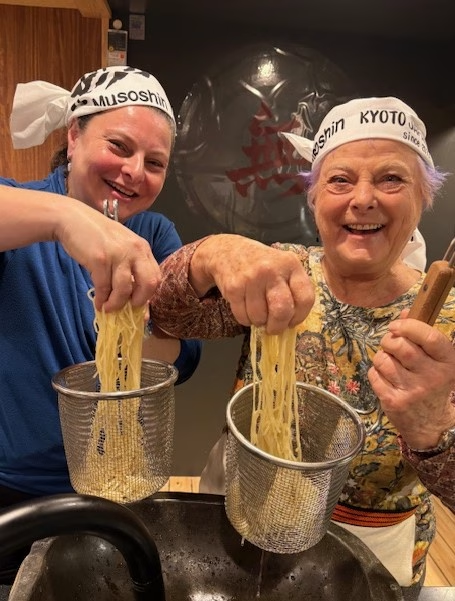
After a few minutes, the noodles are ready to go into our waiting ramen bowls. The rest is simply a matter of assembly. We ladle hot broth and Kaeshi sauce over our noodles and add our personal selection of add-ons―seared pork belly, sliced green onions, mushrooms, and a lovely jammy egg.
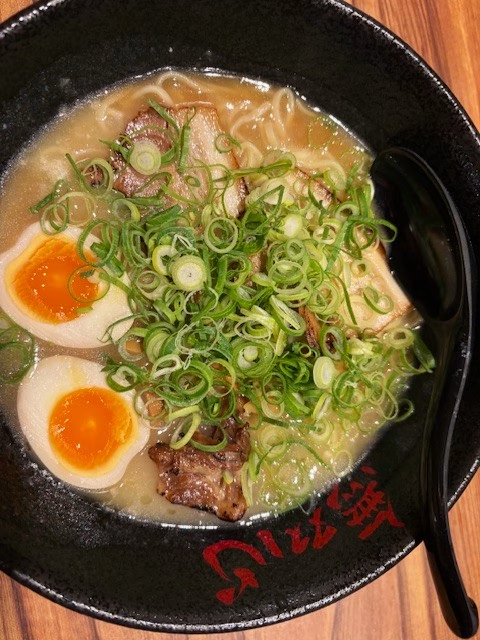
It’s time to eat! The ramen is a burst of umami flavors. Filling, rich, and savory, it is perfect for a cold winter’s day. Ramen is a simple meal with many variations. We have learned one type—Tonkotsu, or pork bone broth, with Kaeshi-Shoyu (soy) flavoring sauce. But there are other broth profiles and other types of Kaeshi sauce (salt, miso, and sesame), as well as countless regional recipes. Most Japanese have a favorite version, which explains the long lines in front of some ramen shops.
Note: Our driver picks up our painted bowls the next day while Erin and I are busy with another activity. Later, we offer the bowls as hostess gifts at a Japanese home where we stay for a week.
*
Next week’s post ventures into more unusual Japanese dishes and the realm of traditional fast food.
Sushi Making Japan; https://sushimakingjapan.com/tokyo
Musoshin Ramen: https://musoushin-kyoto.com/en/
First published on kathrynslattery.substack.com on 04/25/2026
Sign up to receive the latest news, events and personal insights from Katie Lang‑Slattery.
Leave a Reply