
2023, Luang Prabang, Laos
I WAS ONE OF A SMALL GROUP gathered around, eager to learn the craft of bamboo weaving. We sat at a row of worktables. You sat in front of us on a low stool not more than eight inches high, stripping the tough outer skin from lengths of bamboo with a sharp, chisel-shaped tool. You stood when you were introduced, nodded, and smiled. I’m sorry I don’t remember your name; perhaps I didn’t hear it. I miss a lot these days because of poor hearing. Hearing aids help, but much of what goes on around me comes through as a jumble of sounds, rather than words with meaning.
Still, I love to travel. Ever since I had my first passport at the age of sixteen, I’ve been addicted to the dopamine and adrenaline that streams through my veins when I visit a new place—the more exotic, the better.
These days I often travel with my daughter. Though I can usually hear bits and pieces of conversation, she makes a point of sharing with me a synopsis of what she learns from our guides. Beyond that, my eyes, my taste buds, and my hands allow me to learn more about a place than one might imagine. Still, I often miss the connection to others that a conversation offers.
A few years ago, my daughter and I traveled to your beautiful country of Laos.
On our first day, we watched local women weave intricately bordered, skirt-lengths of fabric. Their large wooden looms filled an open-sided room. The clack of the heddles lifting the warp threads, the soft purr of the shuttles pulling the weft from side to side, and the thump of the reed beating the weft into place were like music with its own rhythm.
Later, we watched a tiny, wizened lady, a master of her craft, trace patterns in wax onto fabric that would be dyed a deep indigo blue. In the evening, we dined on grilled fish, spicy green papaya salad, and delicate coconut pancakes in an alley lined with food stalls.
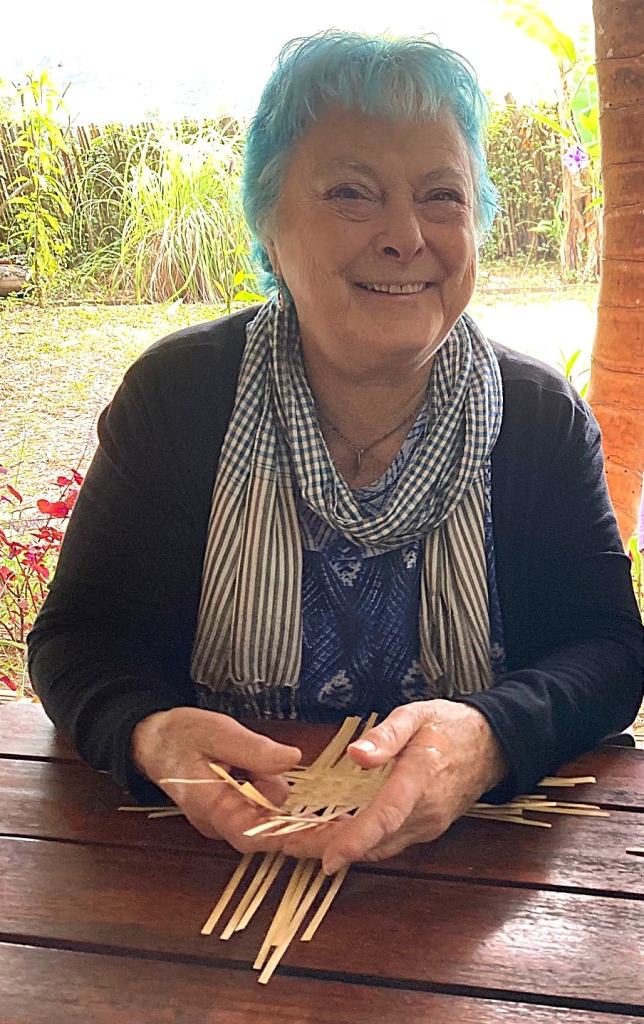
The next day we met you. Our taxi had driven down a narrow lane bordered by bamboo and banana trees and a cluster of buildings where a sign announced our destination: The Bamboo Experience. We took off our shoes as directed and climbed the wooden stairs to the upper room of a traditional structure on stilts, which had been modified to accommodate tourist activities. We were part of a group composed of other independent tourists: a couple from Singapore, another couple from Italy, and my daughter and me—an eighty-year-old American lady with blue hair, a cane, and hearing aids.
A towering bamboo grove shaded the open-air room, and a vista of rice fields stretched into the distance. A young and handsome member of the family of bamboo growers showed us old baskets, fish traps, and traditional musical instruments, all crafted from bamboo. He explained that there were many different species of bamboo, and some could produce new shoots more than three feet tall overnight. “You can almost see them grow,” he said, a sentence I remember hearing on my own.
Downstairs, under the house, he and a teenage helper demonstrated how sticky rice, the main starch of the Laos diet, was hulled and threshed. I did not need to hear. My eyes were enough. Several of the tourists, including my daughter, tried their hand at pounding the rice and flipping it on a bamboo tray to remove the chaff—more difficult than it looked. The rice often bounced off the tray and fell to the ground when the novice tourists attempted the maneuver. This caused embarrassed laughter and renewed attempts to do it right.
In a gazebo-style kitchen, we participated in a hands-on cooking class. With sharp knives, we chopped fresh herbs and minced pork. We learned the art of steaming sticky rice, folded banana leaf bundles filled with fish, and dropped fresh bamboo shoots into a pot with other vegetables for a local soup. Always happy to have a knife in my hand and food to chop, I felt energized and joyful.
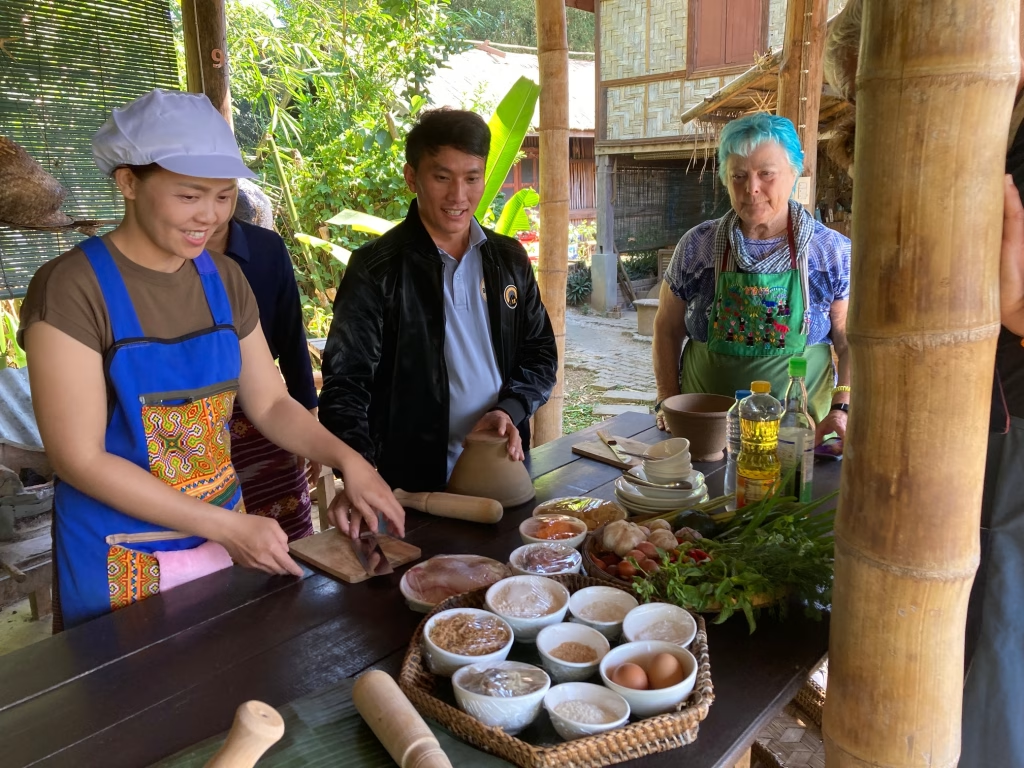
While the rice and fish packets steamed and the soup bubbled over a wood fire, our guides directed us back under the house to where you, our bamboo weaving teacher, waited.
I remember your dark hair and dark eyes and the warmth of your smile. You wore black slacks, a spotless white polo shirt with a green bamboo logo, a shiny watch, and rubber sandals, the kind I would call thongs or flip-flops. You had a round face and a rounded belly to match. I guessed you to be a few decades older than the others working here, maybe in your mid-60s. But it’s difficult to tell the age of someone from another culture where life can be more difficult. At any rate, I was drawn to you as a kindred senior.
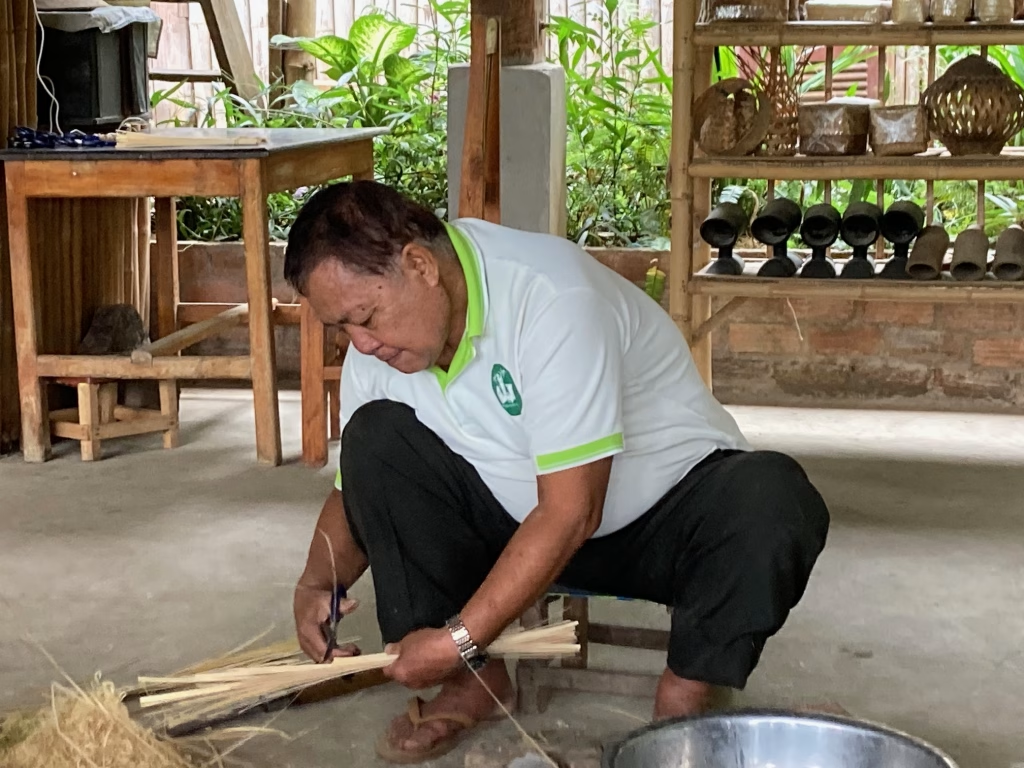
One of the helpers gave us each a pile of fourteen bamboo strips, and you demonstrated how to split them with careful fingers while one of the younger men, who spoke English, explained the process. It was precise and painstaking work to split the strips to an even thickness. I split mine slowly and cautiously and ended up with the required pile of twenty-eight, mostly even, strips.
We watched eagerly as you began to demonstrate the actual weaving. Your English-speaking assistant translated the instructions. With half the strips arranged on a flat surface, you showed us how to weave the first horizontal piece—first over one strip, then under and over two strips at a time. The second row was the opposite, and the third row would be identical to the first. Your assistant walked around helping those who struggled.
I was seated on the far-right end of the line of tables, my daughter on my left and the others ranged further along. I fancy myself to be an artist and a craftsperson who is good with her hands, so I concentrated on doing the work correctly. I was sure I could produce a successful bamboo mat.
After you had demonstrated the basic weaving technique, you came over and sat down facing me at the corner of the table. I was pleased that you came to me first. I nodded as you sat down, and you smiled back in response. You reached out your hands to guide mine. I felt your kindness and your gentle nature and was comfortable with you there, our fingers almost touching.
You guided my fingers as I wove the second strip, and you chanted the rhythm of the weaving, one over then two under, and so on. “1, 2, 2, 2, 2, 2, 2, 1.” You nodded your approval when I did a row correctly, then gently pushed the strip down tight for me. “Now, 2, 2, 2, 2, 2, 2, 2,” you chanted.
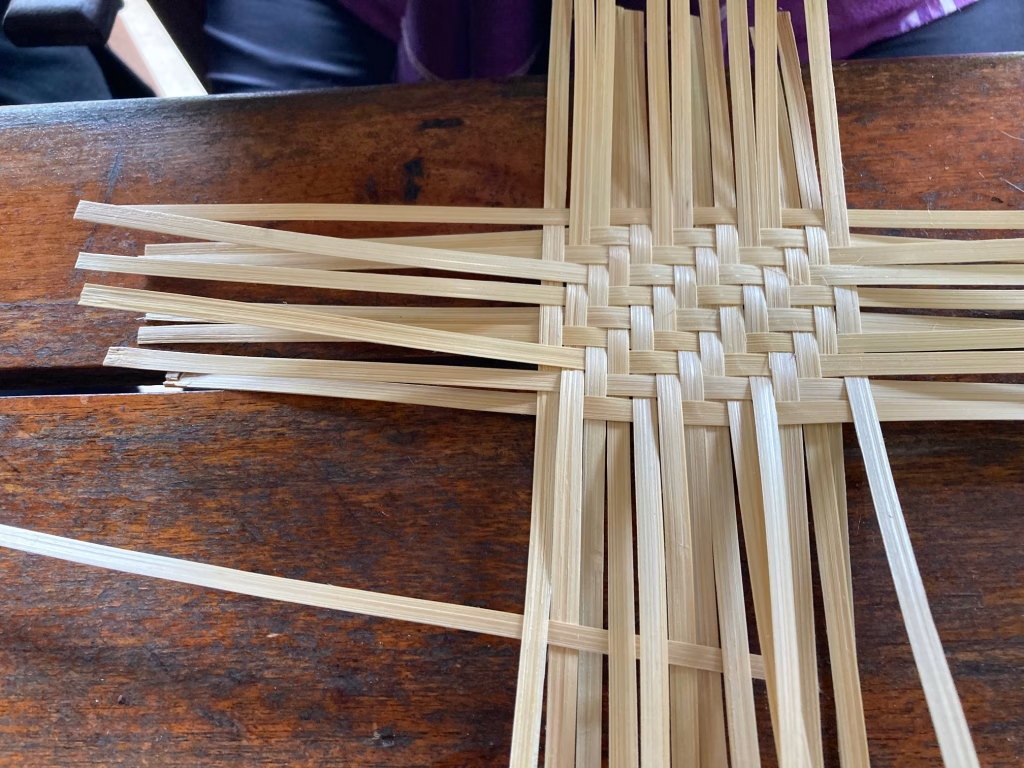
“Good,” you said. As I picked up the third strip, you began the weaving chant again. “1, 2, 2, 2, 2, 2, 2, 1.”
When I fumbled a strip, your blunt fingers helped me correct it. I think perhaps these numbers and the word “good” were your only English. You were on the side of my better ear, and I might have understood you if we had shared a common language.
I expected you to leave and help some of the other tourists, but you didn’t. You stayed by my side, helping me. I’d like to think that you found me intriguing, this strange American lady with turquoise hair. Perhaps it was simply the pull of our similar ages that kept you there, maybe my earnestness, most likely that respect and care for the elderly that I felt everywhere in Laos. Whatever the reason, you stayed with me until the end, chanting the over and under numbers for each row, your fingers helping only when I needed help. When all the strips were properly woven, you showed me how to bend the ends, break them off at just the right spot, and tuck them in to form an edge. When we finished, I had a three-inch square bamboo mat. I have it on my desk today as I write.
Those minutes working are the strongest memory I took home from Laos. I felt noticed and appreciated, but more than that, I felt I made a friend. I had interacted, one on one, with a local Lao person. We shared a creative experience and exchanged the warmth of our smiles. Despite my poor hearing, despite our lack of a common language, we communicated. Though you spoke only a few words and all I said was “thank you,” we connected.
In another world, we might have had a conversation. Perhaps we would have discussed growing old and seeing many changes over the years or talked simply of the joy of craft and using our hands. You would have asked me questions about my country, and I would have asked you about life in Laos. I would have liked that. Yet the memory of our sparse exchange lingers with me still and makes me smile.
Sign up to receive the latest news, events and personal insights from Katie Lang‑Slattery.
Leave a Reply